How to Start a Laser Engraving Business
A laser engraving business can be started for a few thousand dollars and run out of a spare room. That part of the pitch is true. What gets left out is that “profitable” depends almost entirely on three decisions you make early: which machine you buy, what you choose to sell, and how you price it. Get those wrong, and you own an expensive hobby.
This is the realistic version of startup costs that includes the things people forget and an honest look at where the money actually comes from.
Startup Costs, Fully Loaded
The laser is roughly two-thirds of what you’ll actually spend before you’re operational. Budget for all of it:
- Laser engraver: $500 (entry diode) to $8,000+ (production MOPA/fiber)
- Ventilation and fume extraction: $200–$1,000 required, not optional
- Rated safety eyewear: $50–$150, matched to your machine’s wavelength
- Rotary attachment: $200–$500 if you plan on tumblers, bottles, or rings
- Software: $0–$600/year
- Initial materials and test stock: $300–$1,000
- Business registration and insurance: $150–$800
- Product photography setup: $50–$300 underrated; bad photos kill listings
A realistic home setup lands between $2,000 and $10,000. Match a machine to your budget with the fiber laser guide or the MOPA guide.
Choosing Your First Machine
This decision sets the ceiling on what you can sell, so work backwards from the product.
| Machine type | Handles | Doesn’t handle | Typical price |
|---|---|---|---|
| Diode | Wood, leather, some coated metal | Bare metal, fine detail | $300–$1,200 |
| CO2 | Wood, acrylic, leather, glass | Bare metal without coating | $1,500–$6,000 |
| Fiber | Black marking on all common metals | Wood, acrylic, colour | $1,000–$3,500 |
| MOPA | Metals plus colour and depth control | Wood, acrylic | $2,500–$8,000 |
Buy the machine that matches the products you intend to sell, not the most expensive one you can afford, and not the cheapest one that technically works.
Picking Products That Sell
The consistently strong categories are drinkware and tumblers, corporate and promotional items, wedding and gift items, pet tags and personalized jewelry, and industrial or tool marking. That last one is worth a second look; it’s the least crowded and the least seasonal, because businesses need serialisation and asset tagging year-round, and they reorder.
Pick one category to start. A focused shop is easier to photograph, easier to price, easier to market, and easier to get found for. Trying to serve everyone at once is how new shops end up invisible.
Pricing Your Work
Most laser businesses land on a blend of two methods:
- Per-minute pricing: $1–$3 per minute of machine run time, plus materials
- Market pricing: check comparable products on Etsy or at local markets, then position deliberately
A 2× to 3× markup over materials and labor is standard. Don’t go below 1.5× outside bulk or promotional work.
The number people forget is their own time. Design time, setup, test runs, materials, packing, customer messages, and a shipping trip can easily be 20 minutes on a piece that engraves in three. Price the 23 minutes, not the three. Underpricing is the most common reason a busy laser business still isn’t making money.
Getting Your First Customers
Etsy is usually the fastest route to first sales for personalized goods, with organic traffic typically building over 30–60 days for a focused shop. Competition is heavy, so photography and a clear niche matter more than volume of listings.
Local markets and craft fairs are worth three to five appearances early. They teach you more about pricing and real demand in a weekend than research does in a month, and you keep the whole margin.
Local B2B is the channel most new owners skip and the one with the best economics. Trophy shops, promotional-product companies, machine shops, breweries, and equipment firms all need marking done, and they reorder. One recurring account is worth dozens of one-off Etsy sales.
Instagram and TikTok work unusually well here because the engraving process is inherently satisfying to watch. The content largely films itself while you work.
A Realistic First Year
Nobody can promise you numbers, and anyone who does is selling something. But the shape of a typical first year looks roughly like this:
- Months 1–2: setup and learning. You’ll waste material finding settings. This is normal and worth budgeting for.
- Months 3–4: first sales, usually friends, local, or early marketplace orders. Pricing gets corrected here.
- Months 5–8: a product line settles. You learn which items actually sell and stop making the ones that don’t.
- Months 9–12: repeat customers, and B2B accounts start to matter more than one-off sales.
The businesses that stall usually stall on marketing, not on machine capability. A laser sitting idle is not a wattage problem.
Safety and Legal Basics
- Fume extraction is not negotiable. Engraving produces particulate and, on some plastics, genuinely hazardous gases; never cut or engrave PVC.
- Eyewear rated for your wavelength. Fiber runs at 1064 nm and is invisible; ordinary safety glasses do nothing.
- Never leave a running machine unattended. Keep an extinguisher within reach.
- Check local rules on home-based businesses, and get liability insurance before you sell.
- Don’t engrave trademarked logos without permission a common and avoidable way to get a shop shut down.
Match a Machine to Your Budget
If you’re leaning toward metal products — tumblers, tags, jewellery, promotional and industrial items — start with the fiber and MOPA guides.
See Fiber Laser Picks →Common Questions
How much can I realistically make?
It varies far too widely to promise a figure, and it depends more on your sales channel and pricing than on your equipment. What’s reliable is the shape: revenue tracks orders, and orders track marketing. The machine is rarely the limiting factor.
Can I run this from an apartment?
Sometimes, but ventilation is the deciding constraint. You need to exhaust fumes outside or run proper filtration, and you need somewhere the noise won’t cause problems. Check your lease before buying.
Do I need an LLC?
Requirements vary by location, so check locally. Most owners register a business entity and get liability insurance before their first paid sale. This is general information, not legal advice worth a short conversation with an accountant or attorney in your area.
Should I buy used?
It can work, but check the laser source hours, confirm the software still works with current systems, and establish whether any warranty transfers. A used machine with no support is only a bargain until it stops working.
Where to Go Next
- MOPA Laser Engraver Buying Guide: Start here if you haven’t bought yet
- Best MOPA Laser for a Business
- Best Fiber Laser for a Small Business
- Best 60W MOPA Fiber Lasers
Which laser is right for your work?
Answer three questions. I'll point you at the machine that actually fits.
1. What are you marking most?
2. What matters most?
3. Your budget?
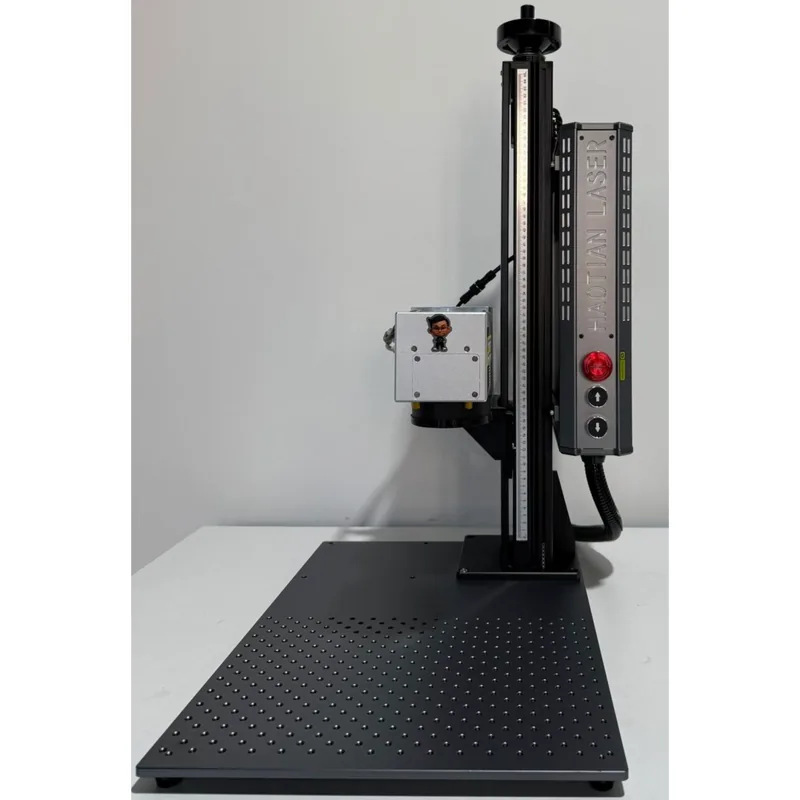
Haotian 50W JPT M8 MOPA Fiber Laser
4.9The 60W JPT M7 source is the colour-marking benchmark. Deepest engraving of the three MOPA picks.
- 60W JPT M7 MOPA source
- Full colour marking on stainless
- 1-500ns adjustable pulse width
- Deep engraving and annealing in one machine